Showing posts with label building. Show all posts

13 December 2006

Sustainability Background Papers

(picture by sillygwailo)

I'd like to point you to a series of interesting papers, posted at the website of the Parliamentary Commissioner of the Environment. They are background papers on a series of issues. They are all important, yet I'd like to emphasise a few:

by Anew NZ
Significant work on progress indicators is taking place in New Zealand but the challenge is to achieve integration and comparability of the diverse indicator sets. Gross Domestic Product should no longer be used as a key indicator of society's well-being. Six action steps are recommended.


* Corporate sustainability reporting in New Zealand (0.3 MB pdf)
by Kerry Griffiths and Julia Lindesay
The emergence of triple bottom line (TBL) reporting in New Zealand, where stakeholder demands for information and transparency are not as strong as they are internationally.


* Lyttelton working towards sustainability: A case study of Project Port Lyttelton, a community group acting as catalyst (4.1 MB pdf)
by Margaret Jefferies and Wendy Everingham
Project Port Lyttelton is a grass roots community group that works to bring about a sustainable world locally. An exploration of aspects including communication, values, networking, and taking risks, and a review of several Lyttelton projects.

* Sustainability in New Zealand - Lifting the game (0.5 MB pdf)
by John Peet
Our economy's relationships with the natural environment, society and our institutional framework are not sustainable. To move forward we need a national strategy for sustainable development and policy tools including ecotaxes and tradeable permits.


by Robert Vale and Charles Eason
Sustainability seen in terms of self-reliant, resilient, and resource efficient housing, of which few New Zealand examples exist. Sustainable housing means new buildings and neighbourhoods with zero non-renewable energy consumption to suit a range of tastes and incomes.


08 November 2006

New Zealand's Cult of Cold

Yesterday, the Parliamentary Commissioner of the Environment published its latest report 'Healthy, Wealthy and Wise', claiming that up to one third of New Zealand's homes, housing more than 1 million people, are cold, damp, causing sickness and keeping people in poverty. The report call s on government to take radical action.

This reminds me of a report I wrote at the end of July this year. It is reproduced below:

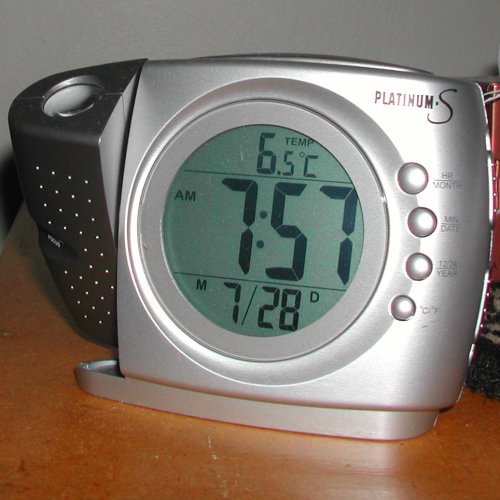
(The temperature measured in our bedroom, on 28 Jul at 7.57am: 6.5 degrees!)

It is not that the winter is especially cold in New Zealand. But it is a rather nasty experience! More so since we are experiencing one of the coldest winters for a longtime this year. Where we come from, the winter is much colder than here, but so much easier to experience ... Residential housing elsewhere is nice, warm and cosy – but not so in New Zealand. Buildings have wafer thin walls, no double glazing and construction that seems to be designed to let as much heat escape as possible.


In New Zealand, many people worship a cult of cold. One can see people walking around in t-shirts in the middle of the winter. With 5 degrees Celsius, many children go to school in shorts. The other day, a frosty morning, an 11 year old even boarded the bus with bare feet.

According to the MetService, this year is the coldest since 1972, and some people told me that they didn't remember anything as cold as that since 1951 when they moved here. This chill highlights some uncomfortable facts: cold homes may be killing hundreds of people each year. A staggering 500 more people over 80 die in July than in February, and death from respiratory disease in children is three times more likely to occur in July than January. Compare this with the country's road toll of 366 for the past year. Also, compare this to colder countries like Sweden and Russia, where the jump in deaths during winter is much less severe.

The average temperature in New Zealand homes lies just below the point the World Health Organisation warns can threaten health (16 degrees). The recommendation is that homes be heated to 18 degrees. Most New Zealanders put up with such conditions without complaints. They seem to consider insulating and heating their homes a waste of money. Never mind the consequences. This is an aspect of local culture I don't think we ever will adapt to!


We, for our part, have huge electricity bills. Even though we only heat our daughter's room, and sometimes put on an electrical oil column heater beside the breakfast table, as eating breakfast there with 10 degrees is neither enjoyable or acceptable. The only fixed installed heating in the building is a logburner in the kitchen. Burning enough wood, it will heat the kitchen and the dining area nicely, but not the rest of the house. We have abandoned the master bedroom during the winter, as we regularly measure 5 or 6 degrees there at the end of the night. Who wants to get up in the morning in such freezing cold conditions?

04 October 2006

The Passive House

What is a 'Passive House'?
A Passive house is a building in which indoor air temperatures above the WHO recommend minimum of 18°C are maintained year round without the need for heating appliances.
http://passivehouse.org.nz
This makes sense, in a time of cold winters, rising electricity prices and anti-airpollution measures.


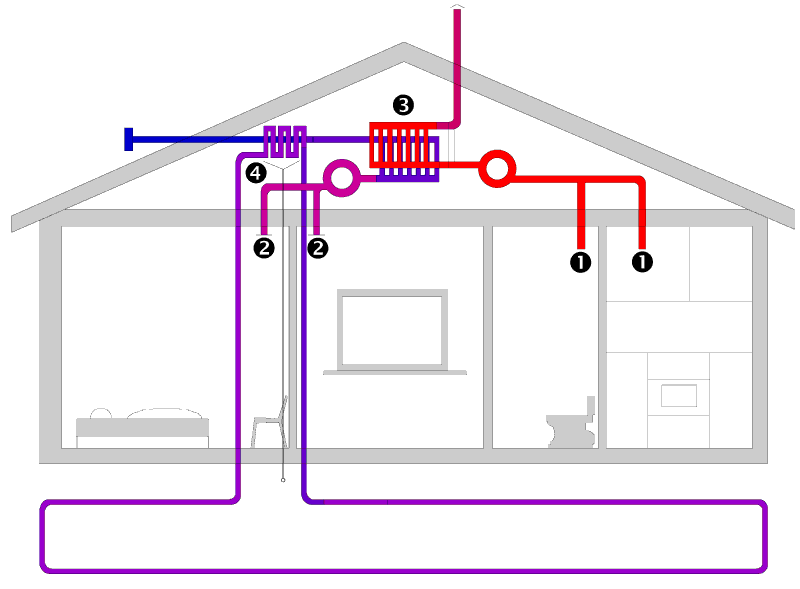
How does it work? Insulate the building well (airtight) and maximise passive heat gain. Install double glazed windows and ventilate your building. To gain heat, align it northfacing. Also appliances and the body heat of the occupants will warm it up. Install solar panels for your hotwater needs.

It all sounds simple, and it probably works, too! At a time of climate change, can we afford not to build in this way?

For more and detailed information, visit http://passivehouse.co.nz